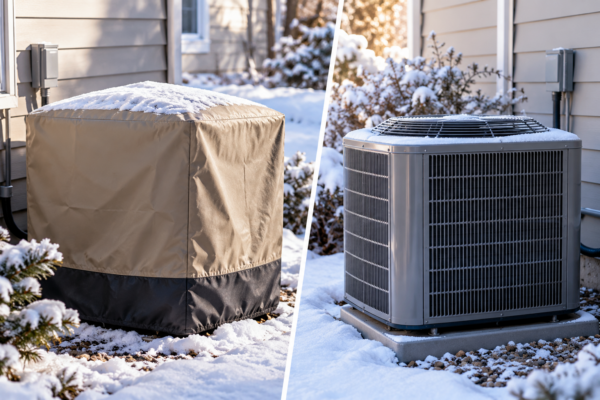
Should I cover my outdoor AC unit in winter? A full cover can trap moisture, causing rust and damage. Learn the right way to protect your system. Contact...
What Thermostat Settings Save The Most Money?
 For homeowners looking to reduce their monthly expenses, a common question is, what thermostat settings save the most money? The answer is more nuanced than a single number, as it involves a strategic approach to both heating and cooling. Fortunately, by understanding a few key principles, you can significantly lower your energy bills without sacrificing comfort. Your thermostat is the command center for your HVAC system, and using it wisely is the first step toward substantial savings. This guide will break down the optimal settings for every season.
Why Constant Thermostat Adjustments Cost You Money
Many people believe that cranking the AC or heat provides faster temperature changes, but this is a common misconception. Your HVAC system works at a single speed to reach the target temperature. Therefore, setting your thermostat to an extreme temperature doesn’t cool or heat your home any faster; it just makes the system run longer, wasting energy and money. Furthermore, frequent manual adjustments often lead to inefficient cycles. For example, turning the system off and on repeatedly uses more energy than maintaining a consistent temperature or using a planned setback. The key is to find a comfortable, energy-efficient setting and let the system do its job.
Recommended Thermostat Settings for Winter Savings
During the colder months, heating costs can soar. To keep them under control, the U.S. Department of Energy recommends a simple strategy. By following these guidelines, you can achieve significant savings. The goal is to use less energy when you’re asleep or away from home.
- When you are home and awake: Set the thermostat to 68°F. This is a comfortable temperature for most people and is highly efficient.
- When you are asleep or away: Lower the thermostat by 7°-10°F from your normal setting. For instance, setting it to 60-62°F overnight can save up to 10% on your heating bill.
- Avoid drastic changes: A gradual setback is more effective than turning the heat off completely, which forces the system to work much harder to bring the temperature back up.
Importantly, maintaining your system is crucial for it to perform efficiently at these settings. If you notice your furnace blowing cold air, it’s a sign that a professional inspection is needed to ensure you’re getting the most out of your energy usage.
What Are the Best Thermostat Settings for Summer Savings?
Similarly, you can apply the same setback strategy during the summer to manage cooling costs. Air conditioning often represents a large portion of a home’s energy consumption, so optimizing your settings is critical. Consequently, a few degrees can make a major difference in your monthly utility bill.
- When you are home and awake: Set the thermostat to 78°F. While this may feel warm initially, your body will adjust, and it’s a very efficient setting for modern AC units.
- When you are asleep or away: Raise the thermostat by 7°-10°F. Setting it to 85-88°F when you leave the house prevents the AC from running unnecessarily.
- Use fans: A ceiling fan can make a room feel several degrees cooler, allowing you to raise the thermostat setting without feeling a difference in comfort.
How Do Smart Thermostats Help You Save?
The principles of temperature setbacks are the foundation of energy savings, but manually adjusting your thermostat every day can be tedious. This is where modern technology offers a powerful solution. Specifically, upgrading to a smart or Wi-Fi thermostat automates the entire process, maximizing your savings with minimal effort. These devices offer several advantages over traditional models.
Automated Scheduling and Learning
A smart thermostat, like those certified by ENERGY STAR, allows you to program a full week’s worth of temperature changes. More advanced models even learn your daily routines and create a schedule automatically. As a result, the thermostat adjusts itself to an energy-saving temperature when you leave for work and returns to your preferred comfort setting just before you arrive home. This automation ensures you never forget to adjust the temperature, locking in savings every single day.
The Power of Temperature Setbacks
The concept of a ‘setback’ is central to answering the question, what thermostat settings save the most money? A setback is any period of 8 hours or more when you can turn your thermostat back from its normal setting. According to the Department of Energy, you can save as much as 10% a year on heating and cooling by simply turning your thermostat back 7°-10°F from its normal setting for 8 hours a day. This could be overnight while you sleep or during the day when the house is empty. The longer the setback period, the more energy you save. It’s a myth that your system has to work harder to recover, canceling out the savings. In reality, the energy saved during the setback period is always greater than the energy needed to return to a comfortable temperature.
Key Takeaways for Lowering Your Energy Bills
Ultimately, understanding your HVAC system and thermostat is key to unlocking savings. By implementing a consistent strategy, you can take control of your energy consumption and reduce your monthly bills. Remember these final points to maximize your efficiency.
- Winter Setting: Aim for 68°F when home and awake, and lower it by 7-10 degrees when asleep or away.
- Summer Setting: Aim for 78°F when home and awake, and raise it by 7-10 degrees when asleep or away.
- Embrace Technology: A programmable or smart thermostat automates these setbacks, ensuring consistent savings.
- Maintain Your System: Efficiency starts with a well-maintained machine. Following a schedule for regular HVAC maintenance ensures your system runs as intended.
Now that you know what thermostat settings save the most money, you can apply these tips immediately. If your system isn’t performing as it should or you’re considering an upgrade to a smart thermostat, our team of experts is here to help. Contact us for professional service to ensure your home is both comfortable and energy-efficient.
Related Posts